
Iron County Busted Mugshots
What is a mugshot? It is the ID photo taken at booking. The file around it can hold much more. You may find the arresting agency, the date, the charge as booked, held property, bond details, and release information. In Iron County, that trail is often split. The Sheriff, the Correctional Facility, city police, and other agencies may each keep a piece.
Michigan's public-record law can make an existing booking photo releasable. Whether it actually gets released is another matter. It depends on the custodian, the exemptions that apply, and the record you ask for. Charges and case details can also change over time.
Important: Courts hold the current case file, so check there for the latest status on any charge.
Iron County Booking Record Fields
Be specific with your records request. Give the person's name. Add the approximate booking date and the arresting agency. The county does not have to write a new summary or answer questions in narrative form. Ask for the existing records themselves.
| Field | What it may identify |
|---|---|
| Name and identifiers | The person as recorded at intake. |
| Booking date and number | The intake event and the record to request. |
| Charges as booked | Initial charges. |
| Bond and court date | Early process information that can later change. |
| Holding agency and release data | Which custodian may hold follow-up records. |
| Photograph | An image only if one exists and is releasable. |
These terms get mixed up constantly. Booking happens at intake. Arraignment is the first court appearance. Bond is a release condition the court sets. Disposition is how the case eventually ends. Keeping the stages straight keeps an old booking entry from being read as a live case.
Request Iron County Busted Records
When the jail has no public online listing, the Iron County FOIA page is your best route to a booking card or a releasable photo. Mary Dalpra serves as FOIA Coordinator. Her office sits at 2 South Sixth Street, Suite 7, Crystal Falls, MI 49920. She is reachable at (906) 875-3301 and mdalpra@ironmi.org. The Sheriff and Correctional Facility work out of Suite 18 in the same courthouse.
- Name the record precisely, such as an arrest report, booking card, or booking photograph.
- Provide the person’s name, a narrow date range, and the known agency.
- Send the request through the county’s official form and ask whether another custodian owns the record.
- Review any response, redaction, fee estimate, or appeal information under the county procedure.
Michigan FOIA sets response deadlines and lists exemptions. County procedures note that a request may be extended as the law allows. Fees or a deposit can apply. One more caution: an empty online search does not mean the record is missing.
Michigan Mugshot Records and Corrections
State law backs the idea of asking the agency that holds the record. The FOIA exemptions statute explains why some material gets withheld or redacted. The arrest-record framework in MCL 28.243 deals with agency records and corrections, not with commercial sites and what they may publish.
Need a fix? A wrong identity, wrong date, changed outcome, or a set-aside starts with the issuing agency or court. Michigan's expungement assistance resources and court set-aside forms lay out the official routes. Once a correction is made, any third-party site should update through its own documented process. Steer clear of anyone promising guaranteed removal or charging for a government correction.
Find Iron County Busted Mugshots
Iron County's official pages show no searchable roster, no public booking-photo feed, and no jail app. That gap changes how you search. Start with the facility for current custody. Then track down the arresting agency, request the record, and lean on court or state tools only for what they actually cover.
- Call the Iron County Correctional Facility at (906) 875-0651 for a current-custody route.
- Ask Iron River, Crystal Falls, Caspian, the Sheriff, MSP, or the relevant agency for an arrest report when known.
- Use the county FOIA process for existing jail booking material.
- Check MiCOURT for a possible case, then confirm significant status with the clerk.
- Use MDOC OTIS only for state supervision, not county jail custody.
Where Iron County Busted Photos Appear
Official sources come first. Their records show the agency and the custody context. Third-party pages can serve as leads, but treat them as just that. None of them replaces a county response or a court record.
| Channel | Photo status | Access |
|---|---|---|
| Iron County jail | No public roster or policy verified | Call facility, then request records. |
| County FOIA | May address an existing releasable photo | Official form and coordinator. |
| MDOC OTIS | May show an offender photo | State-supervision search only. |
| Local news | Selective agency-supplied images | Secondary context, check the source date. |
| Mugshots.com | County page observed in its index | Unofficial, potentially stale, verify independently. |
| JailExchange | Directory claims unverified | Do not treat as an official live roster. |
Busted and Booked in Iron County
The current jail and Sheriff pages name the Correctional Facility but offer no public name-search roster. County materials do mention an internal JailTracker/Mugshot system. Internal recordkeeping is not a public portal, though, so treat it as no proof that a booking photo sits online.
Need same-day information? Call the facility with a full name and, if you have it, a date of birth or arrest date. Ask which public-information or FOIA route applies. Someone released from custody may still have a booking record on file with an agency.
Note: A search that returns nothing does not confirm that no arrest occurred or that a person has been released.
Recent Iron County Booking Updates
No county blotter checks out here. No same-day list, no archive feed. Recent Iron County arrests call for a targeted request, not an assumed publication window. Local news covers selected incidents only. A story is not a booking feed, and it may run after a person has been released, moved on, or seen charges change.
For local context, try WLUC, the Iron Mountain Daily News, the Iron County Reporter, and WZMQ. These are selective editorial outlets. Note the publication date first. Then note the agency named in a story before treating it as a solid lead.
Iron County and MDOC Photos
MDOC OTIS serves a different purpose than the county jail. It lists people under Michigan Department of Corrections supervision, plus some discharged within the system's stated window. An OTIS photo belongs to that state-supervision record. It will not show everyone arrested, booked, or released in Iron County.
MI-VINE is separate too. It sends custody-status notifications rather than photos. Use it to stay alerted, then confirm status with the agency in charge.
How Long Iron County Mugshots Remain
How long does a booking photo last? Michigan's GS11 schedule offers one answer. It treats jail inmate jackets, which include booking cards and mug shots, as eligible for destruction ten years after release, provided an approved schedule is in place. Treat that as a general expectation rather than a promise about any particular photo. A legal hold, a transfer, an exemption, or an agency's own schedule can all change what actually survives.
Before assuming a photo exists and is public, ask the county directly. Does the record exist? Who holds it? Is it retained, and is it releasable? Historical searches can also reach the Archives of Michigan. Its Iron County guide, though, names no dedicated booking-photo series.
After an Iron County Arrest
An arrest starts a process. Booking is step one, not the outcome. Inside the Crystal Falls courthouse complex, several distinct offices handle what follows: the Iron County Trial Court, the 95B District Court, the clerk, the prosecutor, and the circuit clerk. MiCOURT helps track down public case information. For a question about how a case resolved, though, court staff and the clerk remain the right doors to knock on.
Case status matters. Booking data rarely looks like the end result. Charges can shrink, vanish, or change shape in court. They may be reduced, dismissed, amended, or settled on different terms. Check the disposition first. Only then read a public record as the final word.
Busted Mugshots by Iron County City
City police files and county booking files often sit with different custodians. That is why each community gets its own page. Iron River offers a detailed municipal FOIA packet. Crystal Falls serves as the county-seat hub for courts and the jail. Caspian takes a charter-based path to permanent arrest records. Each page sorts out how those holdings differ from a county booking record.
Iron County Arrest Agency Paths
Read the agency named on the record carefully. A Sheriff arrest, an Iron River Police arrest, a Crystal Falls Police arrest, a Caspian Police arrest, and an MSP arrest can each start with a different incident-report custodian. The county jail may house the person afterward, but its booking material never substitutes for the arresting agency's report. Likewise, an agency report will not confirm whether a jail booking photograph was taken or released.
Match the request to the goal. Want an incident or arrest report? Start with the agency that made the arrest. Want county-held booking material? Use the county FOIA route. For a court ruling or a final charge, turn to the clerk and the public court search. Working source by source takes longer than treating everything as one database, but it keeps record type and custody clear.
- Arrest report
- The law-enforcement record of the reported event and arresting agency’s work.
- Booking card
- The jail intake record, if an intake occurred and the county holds it.
- Disposition
- The court’s eventual result, which may differ from the initial charge.
Iron County Third-Party Records Leads
Treat private arrest and mugshot sites as leads. Nothing more. The Busted Newspaper, RecentlyBooked, Arrests.org, and Mugshots.zone indexes show no verified Iron County Michigan page. Beware same-named pages from other states. They tell you nothing local. Mugshots.com's Michigan index did link an Iron County page, but its internal count reflected neither a live official booking total nor current custody.
Spot an error on a private page? Get the agency or court correction first. The publisher's documented free correction path comes next. Confirm the county, the person, the date, and the source before anything else. A local-news caption or third-party image can outlive the booking itself, so the originating office stays the best place to verify.
Iron County Release Information
Release status changes fast. For the official word, call the Correctional Facility. MI-VINE works well if a notification service fits the situation. Remember that a release does not erase the booking record. By the same token, an old booking record says nothing about who is in custody now.
Keep three things together. The agency name. The date. The response you received. Doing so makes any later verification request easier to read. It also separates a current inquiry from an older public record.
Older materials raise a custody question. Is the county the right holder? The arresting agency, the court, or an archive? Retention rules and record availability are separate questions. Ask both.
A date range and the arresting agency make that request more precise and efficient.
Iron County Record Verification
Most of Iron County's public-safety and court offices share one Crystal Falls building. Each suite answers for its own paperwork. The Sheriff and Correctional Facility sit in Suite 18. FOIA requests run through Suite 7, the District Court Clerk through Suite 5, and Central Dispatch through Suite 2. The prosecutor is in Suite 1, and the County Clerk in Suite 9. Aim your request at the right suite and it is far more likely to reach the person who can actually find the record.
Central Dispatch's own published history shows how duties shifted over the years, from LEIN records-management roles to local police support. That history is useful context. It does not mean Dispatch holds every current record. It simply explains why a requester should first pin down what the item is: a city incident report, a Sheriff record, a jail booking record, or a court file.
Match your time frame to your goal. For a recent event, keep the window narrow. Ask the office for the records custodian's name and the proper request route, and see whether they can identify the record type. For an older event, ask which retention schedule applies and whether the record was transferred or destroyed under it. One thing to avoid: no office will create a report that never existed.
Michigan's retention schedule speaks directly to jail inmate jackets. It lists booking cards and mug shots among the covered material. The general period is release plus ten years, subject to an approved schedule and other lawful exceptions. A retention rule does not make an image public. It does not prove a photo was ever taken, and it cannot override a seal, an exemption, a legal hold, or another agency's control of the file.
Treat the custodian's written response as your central verification document. A county news story, an MDOC result, and a third-party listing can each raise a question, but they come from different sources at different times. Keep a copy of the official reply. Note the request date and any case number the court supplied. That paper trail holds up when dates and sources matter most.
The county directory is handy for follow-up. It lists the County Clerk, prosecutor, Central Dispatch, and MDOC or Parole contacts right beside the Sheriff and jail. Even so, a request belongs with the office that owns the actual record. The prosecutor can supply prosecution context but is not the jail roster. Central Dispatch handles emergencies, not public mugshots. Keeping those roles straight saves confusion when one office sends you to another.
A city police arrest may split the record trail. City records can hold the incident report while county materials cover any later jail booking. Each city has its own access path. Iron River's municipal packet defines a request and appeal route. Crystal Falls' policy names its city FOIA coordinator and requires a document description. Caspian's charter provides for a permanent city arrest record plus monthly reports from the chief. None of these paths guarantees that a public photo or roster exists.
For state and federal questions, confirm which custody system you are searching before you start. OTIS covers Michigan state supervision. MI-VINE sends notifications. The federal Bureau of Prisons and ICE locators track entirely separate populations. A search in the wrong system can return nothing even when another agency holds the record you want. For an Iron County event, start with the county facility, the arresting agency, and the court.
The clearest record trail runs in order: reported incident, arresting-agency record, booking if one occurs, court appearance, and final disposition. A person may be released before any court result exists. A court case may drag on long after the jail record goes stale. A state-supervision result can surface years later. That is why every piece of information you verify should carry its own date and source label.
Michigan's public-record rules do not force an agency to turn an uncertain search into a conclusion. Ask for an existing record. Accept that protected material may be redacted, and use the listed appeal or follow-up process if the office allows it. Note: that approach respects the agency's records duties and keeps the request on solid ground.
Iron County Busted Source Views
The county's Jail and Corrections page is an official department contact, not a public roster. Its archived view still helps. It can point you to the correct county route whenever a name search turns up no live booking result. Start there before assuming nothing exists.
The official jail page tells you where to begin a current-custody question, but an internal booking system is not a public photo feed. For county law enforcement and the correctional facility, the Iron County Sheriff's Office page serves as the official agency contact.
Use the Sheriff page for agency routing, then match the request to the record custodian and the custody stage. When the question moves to court, the MiCOURT case search offers an official starting point.
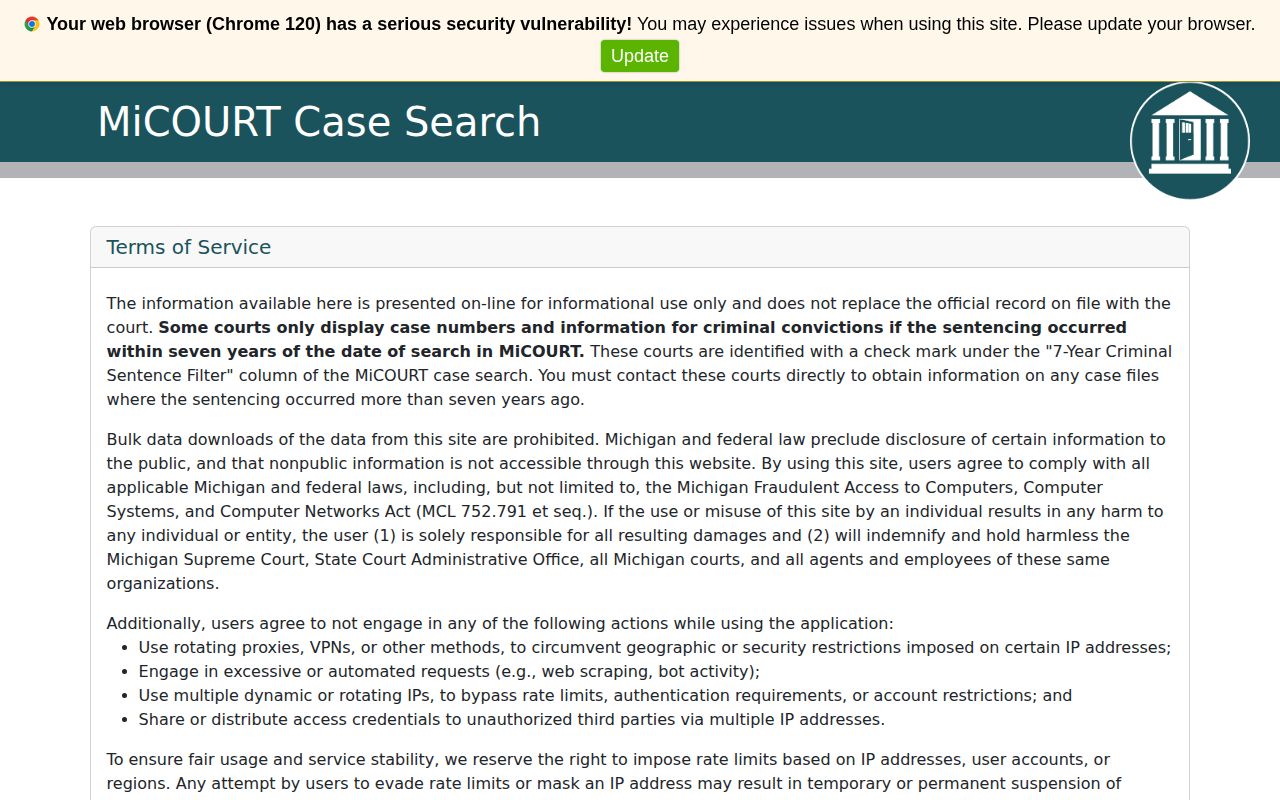
A court search can help trace an arrest forward into later proceedings. Still, the clerk's file remains the authority on any material disposition.